Connector counts are easy to inflate. Coverage is not. What matters is whether your lawyers can cite what they read, whether the jurisdiction is correct, and whether the material is current when it reaches a client‑facing draft.
Coverage means authority‑backed sources your lawyers can cite, mapped by jurisdiction and kept current, surfaced in Word with transparent lineage, not a raw tally of URLs.
Scope note: "1,500+" reflects active, usable sources as at 11 December 2025 and evolves as collections change.
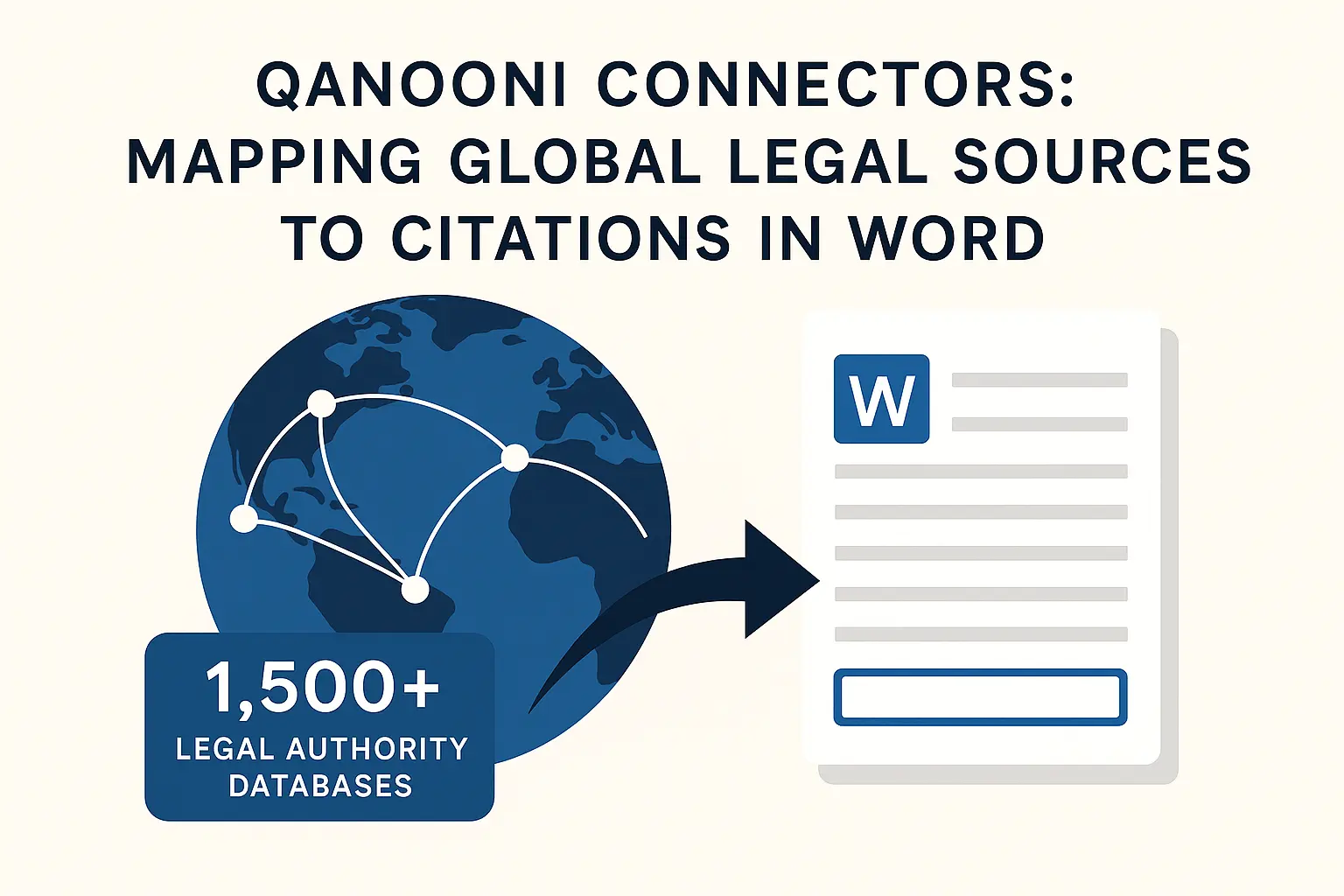
Coverage across 1,500+ global legal authority databases, surfaced with citations in Word.
Why "coverage" matters for legal practice
Legal drafting is inseparable from the hierarchy of law: statutes and statutory instruments, case law, and regulator guidance. If a tool blends sources without respecting that structure or jurisdiction, speed becomes risk. Qanooni's approach is simple: authority first, jurisdictionally precise, and recent enough to stand behind then presented where lawyers work.
That is why our retrieval sits on a governed legal data graph, not a flat index. It keeps answers tied to authority and context. See the legal data graph.
How Qanooni defines "1,500+ global legal authority databases"
We count coverage by authority and usability, not by marketing inventory. A source "counts" only when it meets four tests a partner would recognise.
How we count 1,500+ (the short version)
- Authority: Primary law, reported judgments/law reports, regulator materials, or curated secondary analysis with provenance.
- Jurisdiction mapping: Country, court and regulator mapping across common‑law and civil‑law systems (e.g., UK, US, EU, GCC, APAC).
- Recency: Monitored and refreshed routinely so changes flow into drafting promptly.
- Citable output: Surfaces as citations in Word for quick review.
We count databases a partner would trust: sources with legal authority, mapped to the right jurisdiction, kept current, and surfaced with citations in Word. We exclude duplicates, mirrors and ungoverned sources. "1,500+" is usable coverage, not a raw URL tally.
Counting this way is slower than plugging in every feed we can find. It is also the only way that matters in practice.
What we include and what we don't
We include: statutes and statutory instruments; reported case law and law reports; regulator guidance, notices, circulars and administrative rulings; and curated secondary sources with clear editorial control.
We do not include: vendor marketing blogs; ungoverned newsletters; duplicative mirrors of the same instrument; orphaned PDFs with unknown provenance.
The aim is trustworthy breadth across matters global firms actually run, not a vanity metric.
Law reports, official gazettes and regulatory bulletins (global)
Coverage includes reported case law and law reports, publication in official gazettes and consolidated statutes, and regulator guidance, circulars and administrative rulings sources a partner can cite across common‑law and civil‑law systems.
Civil‑law codes and implementing regulations (global)
Coverage includes codified civil‑law sources and implementing regulations authority a partner can cite, mapped to the correct jurisdiction.
Recency, at a glance
"Up‑to‑date" is not a slogan. It is a workflow: monitor the authority, ingest quickly, preserve amendment lineage, and surface changes where people draft. Qanooni tracks changes, refreshes holdings on a routine cadence, and reflects those deltas in suggestions and checks inside Word, so a later‑inserted clause carries today's position, not last month's.
How coverage shows up where you work
You open the document in Word, ask for help, and see suggestions with citations. The jurisdiction is explicit; the authority is visible; the reasoning path is clear enough to review. You keep what you can stand behind and move on. That is coverage expressed in the only place it counts: the draft.
Our trust posture remains the same across products accuracy, auditability and alignment as set out in Trust in Legal AI.
Global focus, without vendor name‑dropping
This page doesn't list proprietary providers; it describes what coverage must do for global work. Where we license or connect, the measure is the same: authority first, mapped correctly, refreshed routinely, and available as citations in Word. Availability of particular collections can vary by jurisdiction and client licensing.
Key facts
- Coverage = authority you can cite, mapped by jurisdiction, kept current, surfaced in Word.
- "1,500+" reflects usable sources that satisfy four tests (authority, jurisdiction mapping, recency, citable output).
- Global scope spans common‑law and civil‑law systems; duplicates and ungoverned sources are excluded.
- We do not publish vendor lists; coverage is measured by what a partner can cite, not by marketing inventory.
Frequently Asked Questions
How many legal authority databases does Qanooni connect to?
As at 11 December 2025, more than 1,500. We count usable sources with legal authority, mapped by jurisdiction, kept current and surfaced with citations in Word not raw URLs.
What does "1,500+" actually include?
Authoritative databases and collections that meet our tests for authority, jurisdiction mapping, recency and citable outputs. We exclude duplicates, mirrors and sources without provenance.
How do you ensure accuracy across jurisdictions?
By grounding retrieval in the structure of the law and mapping sources to their jurisdiction, court and regulator context, so suggestions stay tied to the right authority.
How often are sources refreshed?
Holdings are monitored and refreshed on a routine cadence; amendment lineage is preserved so suggestions reflect the current position and link back to the right authority.
Related reading
- The Legal Data Graph - why retrieval follows the structure of the law, not surface text
- Trust in Legal AI - accuracy, auditability and alignment in practice