A contract playbook captures the positions a law firm wants to apply when reviewing an agreement. With Qanooni, you create it from historic contracts you consider your gold standard. Upload those agreements, let the AI analyse their clauses and negotiating stances, then review and confirm the preferred positions. Qanooni applies the resulting playbook during contract review in Microsoft Word.
The starting material is work your firm already values. The lawyer chooses the examples that represent its standards, and the AI turns those examples into stances for review. You do not need to write a finished playbook before starting.
This guide explains that process, how to choose suitable source agreements and what a stance means in a worked fees-clause example. The method applies to UK and US law firms: the client, negotiating side and relevant jurisdiction shape the standards you want to carry forward.
How Qanooni creates a playbook from historic contracts
The process starts in Qanooni's Playbooks area. You select past agreements, Qanooni analyses them, and you confirm the preferred positions before using the playbook in review.
- Choose your gold standard agreements. Select historic contracts that reflect the positions your firm wants to use again. Use agreements you are authorised to use for this purpose, and choose examples relevant to the type of work and negotiating side the playbook will support.
- Upload the agreements for AI analysis. Qanooni analyses the documents to extract clause patterns and negotiating positions. The AI derives the stances from the examples you have selected.
- Review and confirm the preferred positions. Check that the extracted stances reflect the standard you intended. A concession made for one client or transaction may need different treatment from a position you want to apply across future matters. Confirm the preferred positions and save the playbook.
- Apply the playbook during review in Word. Qanooni uses the playbook to assess the next agreement. The review identifies departures from the firm's positions and suggests changes for the lawyer to review.
The creation screens below show the NDA examples used in Qanooni's product demonstration.
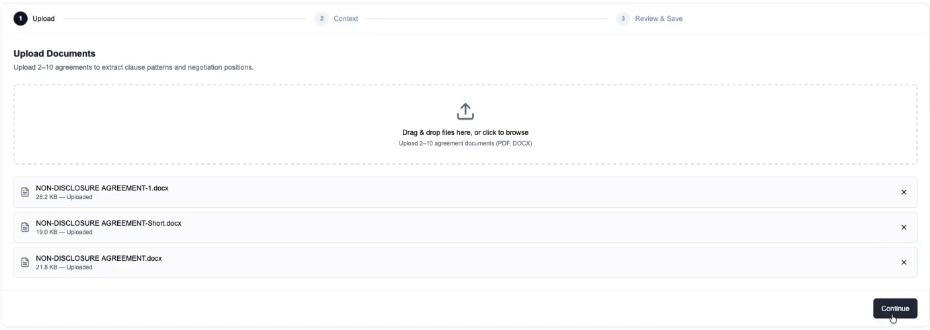

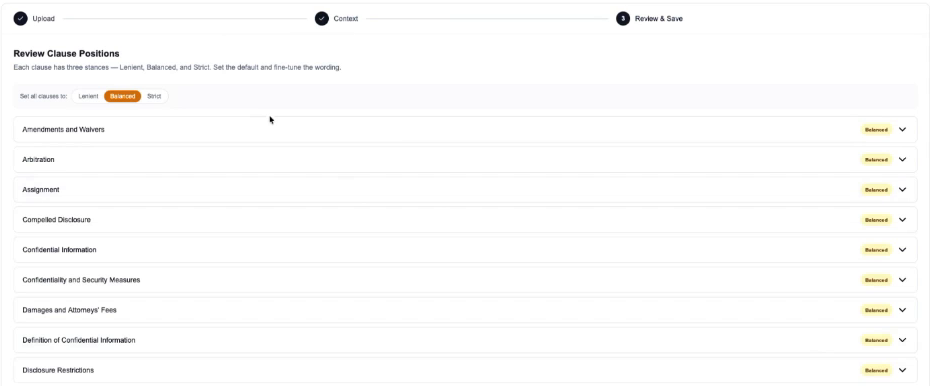
The firm's expertise is already present in the source agreements. Selecting the right examples and confirming the extracted positions makes that expertise usable in subsequent reviews.
Which historic contracts should you choose
Choose agreements because they represent the standard you want to carry forward. A recently signed contract may contain a commercial concession that the firm would usually resist. An older precedent may contain wording the firm has since moved away from. The lawyer selecting the documents decides which examples deserve to become the reference point.
Before uploading, check:
- Whether the agreements cover the same type of work and represent the intended negotiating side.
- Whether their clauses and wording still reflect the firm's current preferred approach.
- Whether any unusual client instruction or negotiated exception could distort the position you want to reuse.
- Whether the governing law and commercial context are relevant to the intended playbook.
For example, customer-side and supplier-side services agreements can allocate the same risk differently. A law firm may need distinct playbooks for those positions, with the relevant client's instructions considered on each matter.
In-house teams also handle different counterparties and negotiating positions. For a law firm, choosing the source agreements is particularly important because its past work can reflect the instructions of many different clients.
What to check when confirming the extracted stances
Check whether the positions Qanooni has derived express the approach you want a reviewer to follow. Consider the preferred outcome, any acceptable alternatives, provisions the agreement should contain and circumstances requiring further client instructions.
The confirmation step matters where the source contracts contain different outcomes. A position accepted on one deal does not automatically become the firm's preferred stance. The lawyer should check the extracted position against the intended standard and relevant client context.
Required provisions also deserve attention. When checking the playbook, consider material issues even if they were absent from the source agreements or negotiated only occasionally. This is a check on the completeness of the intended review standard.
For an optional record of those checks, download the playbook confirmation worksheet in Word. It contains a blank review sheet and a worked fees-clause example to help record your decisions. No email address is required.
A contract playbook example for a fees clause
The table below illustrates what a fees stance means in practice. It uses the fictional Kettlefield and Norwood master services agreement from our Actionstep contract review walkthrough. The agreement uses Delaware law; the pricing positions illustrate client instructions, rather than a legal rule that every agreement must follow.
Kettlefield's draft allows it to increase renewal fees at its discretion. The customer wants an objective limit and enough notice to decide whether to renew. A useful stance makes the customer's preferred outcome clear and helps the reviewer understand which departures need attention.
| Field | Example entry |
|---|---|
| Scope | Customer-side SaaS services agreement; fictional Kettlefield and Norwood matter; Delaware governing law. |
| Preferred position | Price increases only at renewal, subject to an agreed objective cap and written advance notice. |
| Departure | A discretionary increase without an objective cap is outside the customer's approved position. |
| First fallback | Agree an identified index and margin, with the calculation method and notice period expressly stated. |
| Second fallback | Agree a fixed percentage cap and notice period. Obtain client instructions on the actual numbers before proposing them. |
| If no cap is agreed | Escalate. Consider a right to decline renewal or terminate before the increase takes effect, subject to client approval. |
| Must be present | An express price-adjustment mechanism if renewal increases are permitted. |
| Reason | The customer needs predictable costs and a practical decision window before higher fees apply. |
| Owner and exceptions | The supervising lawyer approves the instruction and records any departure agreed for this client. |
The important check is whether the stance captures the intended position. If the firm's selected agreements consistently protect the customer against discretionary fee increases, the lawyer should check that the extracted stance reflects that protection. A broad preference for "reasonable increases" would leave the practical negotiating position unclear.
How the playbook guides AI contract review in Word
QRedline checks the contract against the firm's playbook in Microsoft Word. It identifies departures, explains the relevant position and suggests fallback wording. It also identifies provisions the playbook requires but the agreement omits. The review uses the matter context held in QMatters, alongside the document being reviewed.
In the fictional example, the review identifies missing access restrictions and change-notification provisions as well as issues in existing clauses. This matters because a checklist limited to the clauses already on the page can overlook an obligation that never made it into the draft.

On the fees clause, the finding identifies the playbook's position on price increases, the contractual discretion given to the supplier and the customer's concern about the absence of an objective cap. That gives the reviewing lawyer a specific issue to address, with the firm's reasoning attached.

A commercial objection and a legal restriction should remain distinct. The client may reject a provision even if it is legally enforceable. Where a legal proposition needs checking, Qanooni provides research grounded in cited sources; see how Qanooni grounds its answers.
Suggested amendments are applied through track changes in Word. The lawyer reviews, edits or rejects them before anything leaves the firm. QRedline also compares counter-drafts so the reviewer can see what changed in the next negotiation round.
How to check the playbook on a new agreement
Once the preferred positions are confirmed, try the playbook on an agreement outside the source set. Check whether the findings reflect the standard you intended, including an acceptable clause, a departure and a missing required provision. Include a matter with a known client-specific exception so the reviewer checks the result against the relevant instructions.
The optional confirmation worksheet provides space to record the outcome and any follow-up.
How a playbook works with templates and clause libraries
A contract template supplies a starting document. A clause library supplies reusable language. A playbook supplies the positions used to assess and negotiate an agreement. With Qanooni, historic agreements provide the source material from which AI derives those positions for the lawyer to confirm.
| Resource | What it contains | Use in the fees example |
|---|---|---|
| Contract template | An approved starting agreement. | Includes the initial fees and renewal provisions. |
| Clause library | Approved clauses and alternative wording. | Supplies wording for an index-linked cap or a fixed cap. |
| Contract playbook | The firm's positions for reviewing and negotiating an agreement. | Guides the assessment of a discretionary increase against the customer's approved stance. |
For the wider approach to organising these resources, read our clause playbook versus clause library guide.
Who confirms the positions and handles exceptions
The lawyer responsible for the relevant work should check that the source agreements and extracted stances reflect the intended standard. The firm sets the reusable approach; the client's instructions and agreed exceptions shape its application to the matter. Record who approved each exception, why it was accepted and whether it applies only to that matter or should prompt a wider update.
Accepting a redline on one matter should not, by itself, be treated as a decision to change the firm's playbook. Review the preferred positions when the law, the client's requirements or the firm's negotiating experience changes.
The ABA's Formal Opinion 512 discusses competence and supervision when using generative AI. The SRA's AI risk outlook says firms remain accountable for AI outputs. Checking the extracted stances helps reviewers understand the intended standard; neither source prescribes this workflow or makes a playbook a substitute for reviewing the work.
How playbook review connects to Actionstep
For firms using Qanooni with Actionstep, the lawyer selects the matter, reviews the counterparty's draft in Word with the playbook applied, and saves the approved document back to the matter. Authorised matter context informs the work. Actionstep remains the system of record within the connected system.
The playbook method is useful whether or not a firm uses Actionstep. This integration example shows how it fits into an existing practice-management setup. For the broader relationship, read How Actionstep Intelligence and Qanooni Work Together.
Inspire Legal Group, the first UK firm to connect Qanooni with Actionstep, has previously reported a return of approximately fifty times the cost of the platform. Natalie Foster, Group CEO and Co-founder, describes the change simply: "We stopped thinking of this as a tool. It's where our firm runs."
That reported return relates to the platform, rather than measuring the effect of the playbook alone.
What to ask a vendor about contract playbooks
Ask to see how the system turns your chosen agreements into positions and then uses those positions in review. The demonstration should connect the source material, the confirmed stances and the findings on the next contract.
- Can you derive the playbook's stances from agreements we consider our gold standard?
- Can we review and confirm the preferred positions before using them?
- Can you explain a review finding by reference to the playbook's position?
- What happens when a provision the playbook requires is absent?
- How does the review use authorised matter context and propose changes in Word?
Also check the handling of client information. Qanooni does not use client data to train models; our security and data privacy page explains the controls.
Frequently asked questions
What is a contract playbook
A contract playbook captures the positions a firm wants to apply when reviewing and negotiating an agreement. It helps a reviewer assess the draft against the firm's preferred approach, alongside the client's instructions and any approved exceptions.
How do you create a contract playbook with AI
In Qanooni, select historic contracts you consider your gold standard and upload them in Playbooks. The AI analyses their clauses and negotiating stances. Review and confirm the preferred positions, then use the playbook during contract review in Word.
Which contracts should you use to create a playbook
Choose agreements that represent the standard you want to reuse for the relevant type of work, negotiating side and jurisdiction. Check for outdated wording and unusual concessions. Use documents the firm is authorised to use for this purpose.
What is the difference between a playbook and a contract template
A contract template provides a starting document. A playbook provides the positions used to assess and negotiate it. A clause library supplies reusable wording. Firms can use all three together.
Can AI review a contract against a playbook
Yes. QRedline uses the firm's playbook to review a contract in Word, explain departures, identify missing provisions and suggest fallback wording. The lawyer reviews the proposed changes and decides what to accept.
Do we need a finished playbook before starting with Qanooni
No. Start with historic contracts you regard as your gold standard. Qanooni analyses them to derive the stances, which you review and confirm before applying the playbook during review. The optional worksheet in this guide is not required to create the playbook.
See your agreements become a playbook
Bring examples of historic contracts you consider your gold standard. In a 30-minute demo, see how Qanooni analyses past agreements to derive stances, lets you confirm the preferred positions and applies the playbook during contract review in Word.